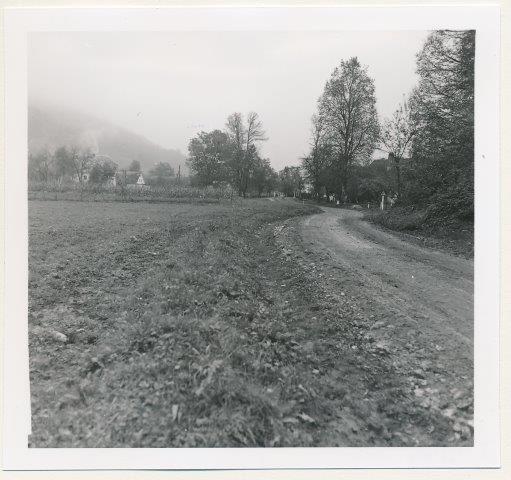
The village was first mentioned in 1564. The Slovene name Občice is said to have originated from the common (communal, meaning občinski in Slovene) land of the villagers, which leads historians to conclude that the place had already been inhabited by Slavs before the arrival of the German-speaking population, certainly before 1450. The German name was derived from the surname Krapfl or Krapfel, which was still present in the wider Kočevsko area in the late 1830s. Other researchers of local etymology have suggested that the surnames Krapf or Kropf could also be the basis of the name. Similarly, some other Gottschee villages, such as Kunč, Štalcerji, Kuhlarji, etc., are said to have been named after surnames.
Population
The 1574 Urbarium of Občice registers two whole farms (huba in Slovene), which at that time were already divided among five owners, one of whom, according to linguistic analyses, had a Slovene surname and four of whom had a German surname. Thus, among the 20 to 25 inhabitants of the village, German identity predominated. Derivatives of the surname that is said to have given Občice its German name Krapflern are no longer to be found in the settlement at this time. In the middle of the 19th century, Občice had 20 houses with 27 families, and its population reached its peak in 1869. At that time, 129 people lived in 24 houses. Then, due to emigration, the number of villagers began to decline. In 1921, the census counted only 56. A decade and a half later, the Drava Banovina Local Lexicon recorded 80 people living in 19 houses in Občice. There were 18 landlords, but only one farmer. The villagers made their living by growing potatoes, wheat, barley, rye and beans, which were then sold in Novo mesto. The wood was transported to the sawmill in Straža, where they were also selling apples and plums. Livestock was sold on local fairs, and wine – predominately from the Isabela variety – in the surrounding area. Literature indicates that they also earned money by beekeeping and yoking.
Resettlement
When the Gottscheers moved there in December 1941, 59 people from 14 families left the village. As in other places in the Črmošnjice valley, a smaller proportion of the German population chose to emigrate than elsewhere in Kočevsko, but some of those who remained were expelled from Občice by the partisans in May 1942. They allegedly collaborated with the occupiers and bought land from the Italian company Emona for compatriots who wanted to return. In 1944 and 1945, after moving from the Rog forests, the headquarters of the TV-15 partisan relay stations for the whole of Slovenia, or 145 courier stations, as many as there were in Slovenia at that time, was located in Občice.
End of the war
According to eyewitness reports, the German air force bombed Občice and nearby Podturn at the end of October 1943, however, the village was one of the few in the Kočevsko region to survive the end of the war relatively unscathed. Twenty of the twenty-four houses remained usable, and almost 70 people lived in the settlement. The number of inhabitants increased slightly by 1961, to a total of 75 villagers, and then, as elsewhere, began to decline, with up and down fluctuations, so that today the official population of Občice is around 60. Several holiday and residential houses have been built on the slopes of the village due to the favourable traffic situation, but the top-floor stone house from the first half of the 19th century with a house number 6, which is registered in the Cultural Heritage Register, has also preserved part of the older building heritage.
Establishment of the Association
Society of Native Gottschee Settlers, founded in 1992, has also restored an old homestead along the road to Semič, which also houses a museum collection, and a model of Gottschee villages and houses is on display in an adjacent building. In the orchard next to the main building, the members of the Society maintain a gene bank of old fruit varieties that were once typical of Kočevsko.